Suno V5 vs. Udio V4: Which AI Music Generator Actually Wins the 2026 Tech Showdown?
Updated: Apr 6
We are witnessing the AI music generation landscape mature into something far more sophisticated than the experimental platforms of just two years ago. Suno and Udio have emerged as the two dominant forces in this space, and their latest releases, Suno V5 and Udio's Allegro v1.5, represent fundamentally different philosophies about what AI-generated music should be. One prioritizes speed and accessibility for content creators; the other is positioning itself as a professional-grade production tool. The question isn't which one is "better" in absolute terms, but rather which one serves your specific creative workflow.
The Core Philosophy Split
Suno V5 and Udio Allegro are solving different problems for different creators. Suno is building for the YouTube creator uploading three times weekly who needs fresh background music without copyright headaches. Udio is targeting the producer who views AI as another instrument in their DAW, something that needs to integrate seamlessly with professional mixing and mastering workflows. This philosophical divide shows up in every aspect of how these platforms operate, from generation speed to the technical specifications of their audio output.
Sound Quality: Where the Real Battle Lives
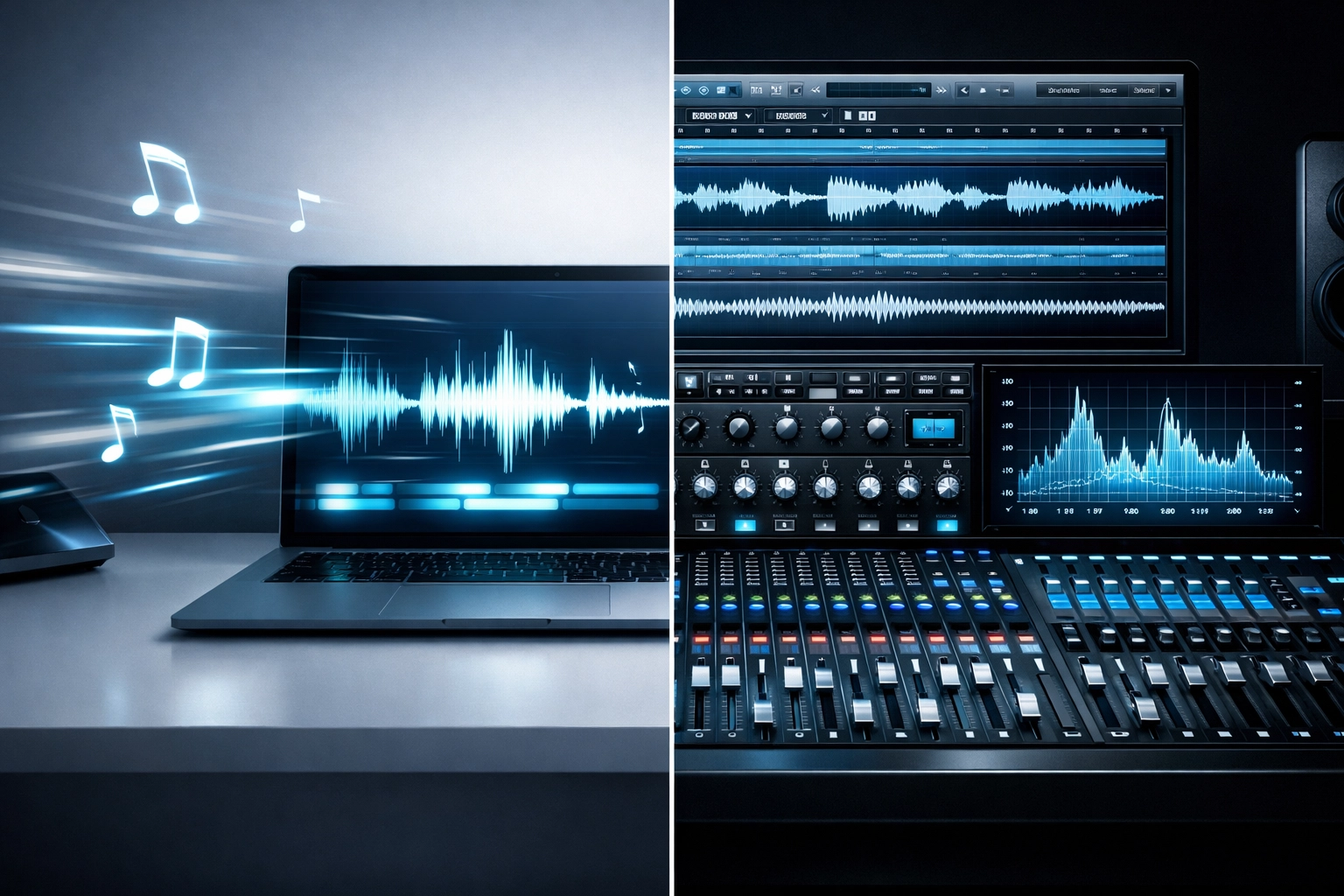
Audio Fidelity and Technical Specs: Udio delivers noticeably superior raw audio quality, outputting at 48kHz with studio-grade clarity that holds up under professional scrutiny. The platform's vocal rendering is particularly impressive, breath control, timbre variation, and emotional range are all significantly more realistic than what Suno V5 produces. When you're listening on quality monitors or headphones, the difference is immediately apparent in how instruments sit in the mix and how vocals maintain presence without sounding artificially processed.
Suno's Sonic Improvements: That said, Suno V5 represents a massive leap forward from its V4.5 predecessor. The platform is now generating cleaner, fuller mixes with substantially more natural vocal realism, especially in acoustic, pop, and hip-hop genres. Harmonies sound more intentional, phrasing feels more human, and the overall "AI-ness" of the output has diminished considerably. The catch is that Suno vocals still work best as supporting elements rather than focal points, think background vocals in a travel vlog rather than the lead vocal in a single.
Where Each One Shines: Udio's complex arrangements and instrument separation make it the clear winner when audio quality is the primary concern. If you're planning to use the generated track as a starting point for further production, extracting stems, replacing elements, or doing surgical edits, Udio's cleaner source material saves hours in post-production. Suno excels when you need "good enough" quality for social media content where compression and viewing conditions mask the subtle differences in audio fidelity.
Speed and Workflow Efficiency
The generation speed difference between these platforms is significant enough to fundamentally alter how you work. Suno V5 produces complete tracks in 30-60 seconds, while Udio Allegro requires 90-120 seconds per generation. This might seem trivial until you're working at scale, a content creator producing weekly videos over a month will save 10-15 hours using Suno's faster generation times. That time savings compounds dramatically for channels producing multiple pieces of content weekly.
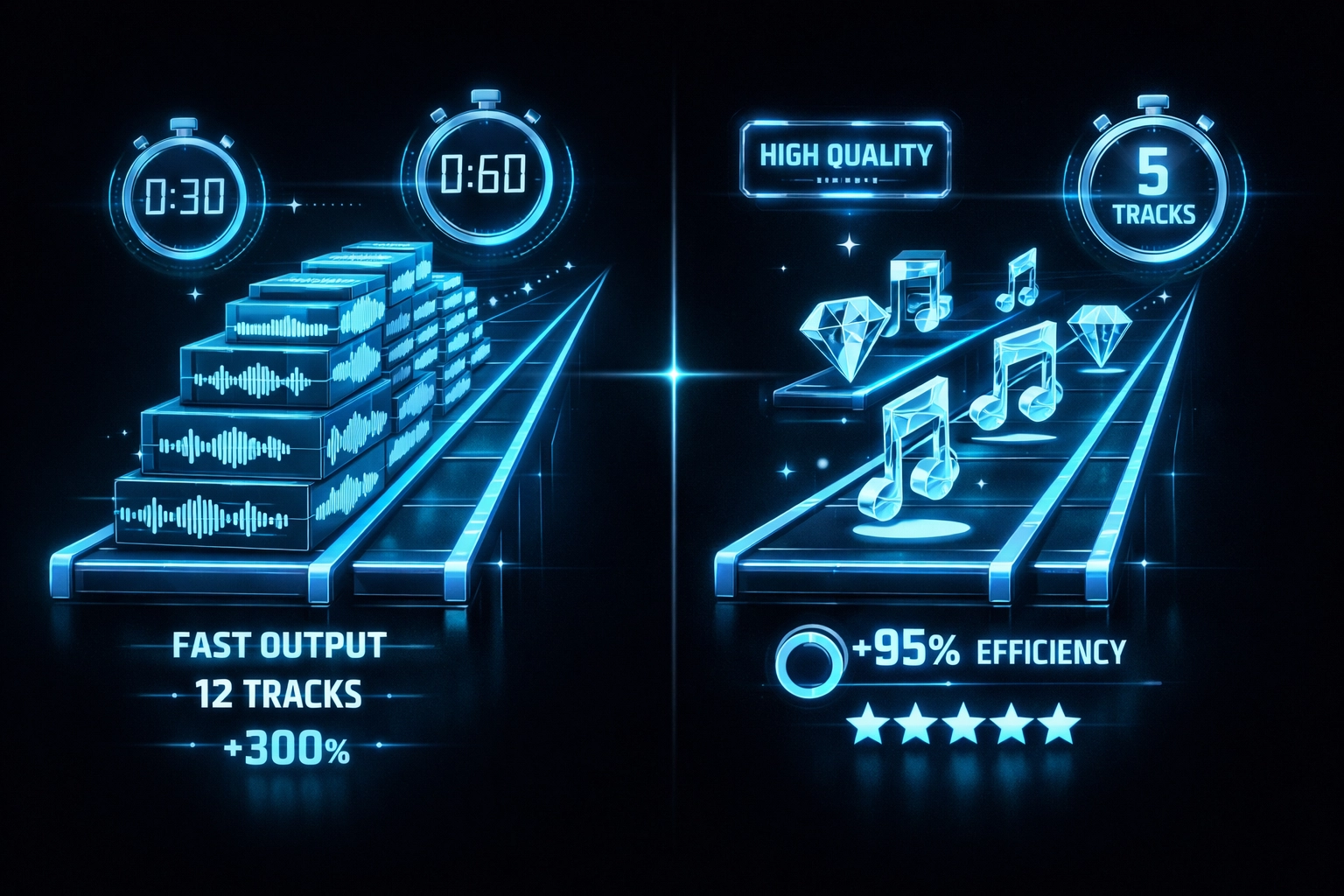
However, there's a counterargument that deserves attention: starting with better source audio from Udio reduces the time spent in post-production mixing and polishing. If you're generating tracks that need minimal adjustment before publication, Udio's longer generation time is offset by less time tweaking EQ, compression, and spatial effects. The workflow efficiency calculation depends entirely on whether you're optimizing for generation volume or final output quality.
Ease of Use and Creative Control
Suno's Accessibility Advantage: Suno V5 is deliberately designed for users who don't want to think too hard about the technical aspects of music production. The interface prioritizes speed and simplicity, you describe what you want, hit generate, and evaluate the results. This approach is liberating for content creators who view music as a supporting element rather than the primary focus of their work. The platform's strength is removing friction from the creative process, enabling rapid experimentation without requiring deep musical knowledge.
Udio's Professional Toolset: Udio Allegro positions itself as a more sophisticated creative partner, offering stem separation, remixing capabilities, and granular control over musical elements. This additional complexity serves musicians and producers who need to integrate AI-generated material into existing projects or who want to treat the AI output as raw material for further refinement. The learning curve is steeper, but the creative possibilities expand considerably once you understand how to leverage these professional features.
Target Audience: Who Should Use Which Platform?
Choose Suno V5 If: You're creating content where music serves a supporting role, YouTube videos, TikTok content, podcasts, or social media marketing. The platform is ideal for hobbyists and content creators who need consistent output without deep technical knowledge. If you're prioritizing volume over perfection and need tracks quickly for background use, Suno's speed and accessibility make it the obvious choice. It's also excellent for rapid prototyping musical ideas or generating placeholder tracks during the editing process.
Choose Udio Allegro If: You're a musician, producer, or audio professional who views AI as a collaborative tool within a broader production workflow. The platform excels when audio quality is the primary focus rather than a secondary consideration. If you're planning to extract stems for remixing, integrate AI-generated elements with live recordings, or produce content where listeners are actively focusing on the music itself, Udio's superior audio fidelity justifies the longer generation times. It's also the better choice for projects destined for professional distribution or sync licensing opportunities.
The Licensing and Commercial Use Consideration
As the AI music landscape matures, the commercial licensing frameworks are becoming increasingly important. Suno's recent partnership with Warner Music Group signals a shift toward more structured licensing arrangements, which could provide clearer pathways for commercial use of generated content. Udio's approach with Universal has been more restrictive, creating what some observers are calling a "walled garden" that may limit how generated tracks can be shared or monetized. For creators building businesses around AI-generated music, understanding these licensing frameworks is becoming as important as evaluating the technical capabilities of each platform.
Real-World Performance Across Genres
Both platforms demonstrate varying levels of competence depending on the musical genre you're working within. Suno V5 particularly excels in pop, hip-hop, and acoustic genres where its improved vocal realism creates genuinely usable results. Electronic and ambient music also work well on the platform, where the focus is less on vocal performance and more on texture and atmosphere.
Udio Allegro shows more consistent quality across a broader range of genres, handling complex jazz arrangements, orchestral elements, and rock instrumentation with notably better separation and clarity. The platform's superior mixing capabilities become especially apparent in genres with dense arrangements where individual instruments need to maintain their own sonic space.
The Evolution Trajectory
Looking at how both platforms are evolving provides insight into where AI music generation is heading. Suno is clearly optimizing for mainstream content creation, focusing on speed, accessibility, and integration with the broader creator economy. The Songkick acquisition suggests ambitions beyond generation itself, potentially connecting AI-created tracks to live performance and artist discovery.
Udio is positioning itself as the professional's choice, continuously improving audio fidelity and expanding creative control features. The platform's trajectory suggests a future where AI-generated music becomes a standard element in professional production workflows, sitting alongside samplers, synthesizers, and other digital instruments.
Making Your Decision
The Suno V5 versus Udio Allegro decision ultimately comes down to your specific creative context. If you're generating multiple tracks weekly for content that prioritizes consistency and speed over audiophile-grade quality, Suno's efficiency advantages make it the pragmatic choice. You'll spend less time waiting for generations and more time creating the content that actually matters to your audience.
If audio quality is non-negotiable and you're working within professional production contexts, Udio's superior output justifies the additional generation time. The cleaner source material provides more flexibility for further refinement and opens up commercial opportunities that require higher quality standards.
The encouraging reality is that both platforms have evolved to the point where the output is genuinely usable for real-world projects. We're no longer in the experimental phase of AI music generation, we're in the optimization phase, where the question isn't whether these tools work but rather which tool best serves your particular creative workflow. That maturation is transforming how music gets created, distributed, and monetized in ways we're only beginning to understand.
Now generating the second article for Friday...
The Home Studio Essentials: Gear That Actually Matters in 2026
![[HERO] The Home Studio Essentials: Gear That Actually Matters in 2026](https://cdn.marblism.com/y8g3rcYyRVV.webp)
The home studio landscape has fundamentally transformed over the past five years. What once required tens of thousands of dollars in specialized equipment is now achievable with a targeted investment of $2,000-$3,000, and critically, with software tools that rival what professional studios were using a decade ago. We are stepping into an era where the quality barrier between bedroom producers and commercial facilities is becoming increasingly negligible, but only if you're making smart decisions about where to allocate your budget and creative energy.
The Mindset Shift: From Gear Acquisition to Strategic Investment
Building a home studio in 2026 requires thinking differently about what you actually need versus what the industry convinces you to want. The democratization of music production has created a paradox: more accessible tools but also more noise about what's "essential." The reality is that a carefully curated set of fundamental tools, combined with strategic use of modern AI-powered services for mixing and mastering, outperforms sprawling gear collections that remain underutilized and poorly understood.
The Core Philosophy: Invest in elements that capture and monitor sound accurately, then leverage modern software and services for everything downstream. This approach prioritizes the creative work, writing, arranging, performing, over endless technical rabbit holes about preamp coloration or compressor attack times that most listeners will never consciously perceive.
The Audio Interface: Your Studio's Foundation
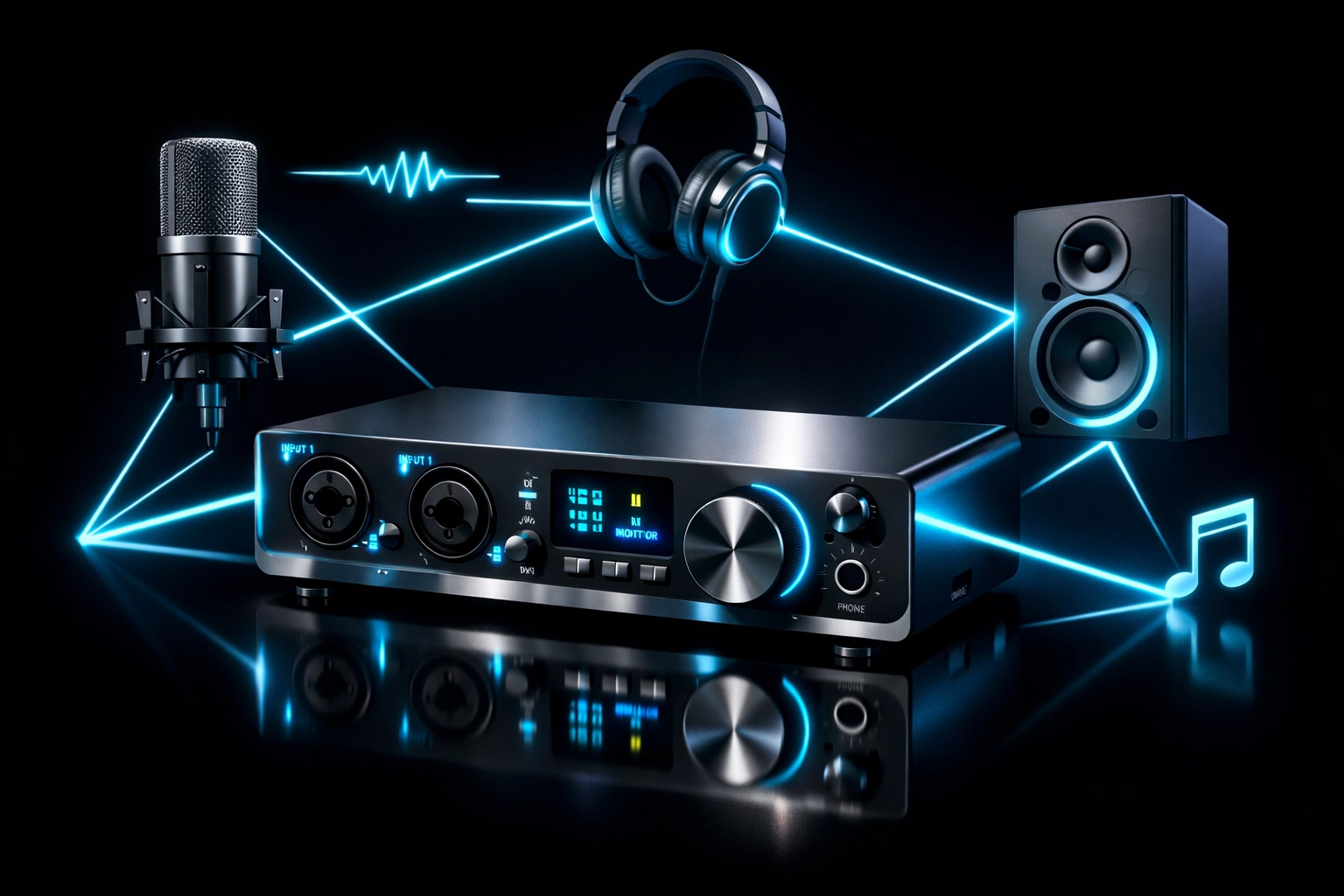
Why It Matters: The audio interface is the bridge between the analog world of microphones and instruments and the digital realm where production happens. In 2026, even budget interfaces are delivering clean, low-latency conversion that would have been considered professional-grade just five years ago. The question isn't whether affordable interfaces sound "good enough", it's about identifying the specific features your workflow actually requires.
What to Look For:
Input Count: Two inputs handle most solo production workflows; four inputs accommodate small band recordings or multiple simultaneous microphone techniques
Preamp Quality: Modern interfaces from Focusrite, Universal Audio, and Audient are delivering preamps with sufficient gain and low noise floors for even quiet dynamic microphones
Monitor Control: Dedicated monitor outputs with volume control and mute switching are non-negotiable for efficient mixing workflows
Direct Monitoring: Essential for recording with zero-latency monitoring, preventing the disorienting delay between performance and playback
The Sweet Spot: The $200-$400 range is delivering exceptional value in 2026. Focusrite's Scarlett series continues dominating for good reason, reliable drivers, clean conversion, and sufficient I/O for growing producers. Universal Audio's Volt series brings analog modeling into the recording path for users wanting subtle sonic character before conversion.
Monitoring: Where Most Home Studios Fail
Getting accurate monitoring is where home studios most frequently undermine themselves. The most sophisticated plugins and the most expensive microphones become useless if you can't accurately hear what you're creating. We are witnessing more home producers recognize that room treatment matters as much as speaker selection, and that headphones serve as a critical secondary reference that bypasses room acoustics entirely.
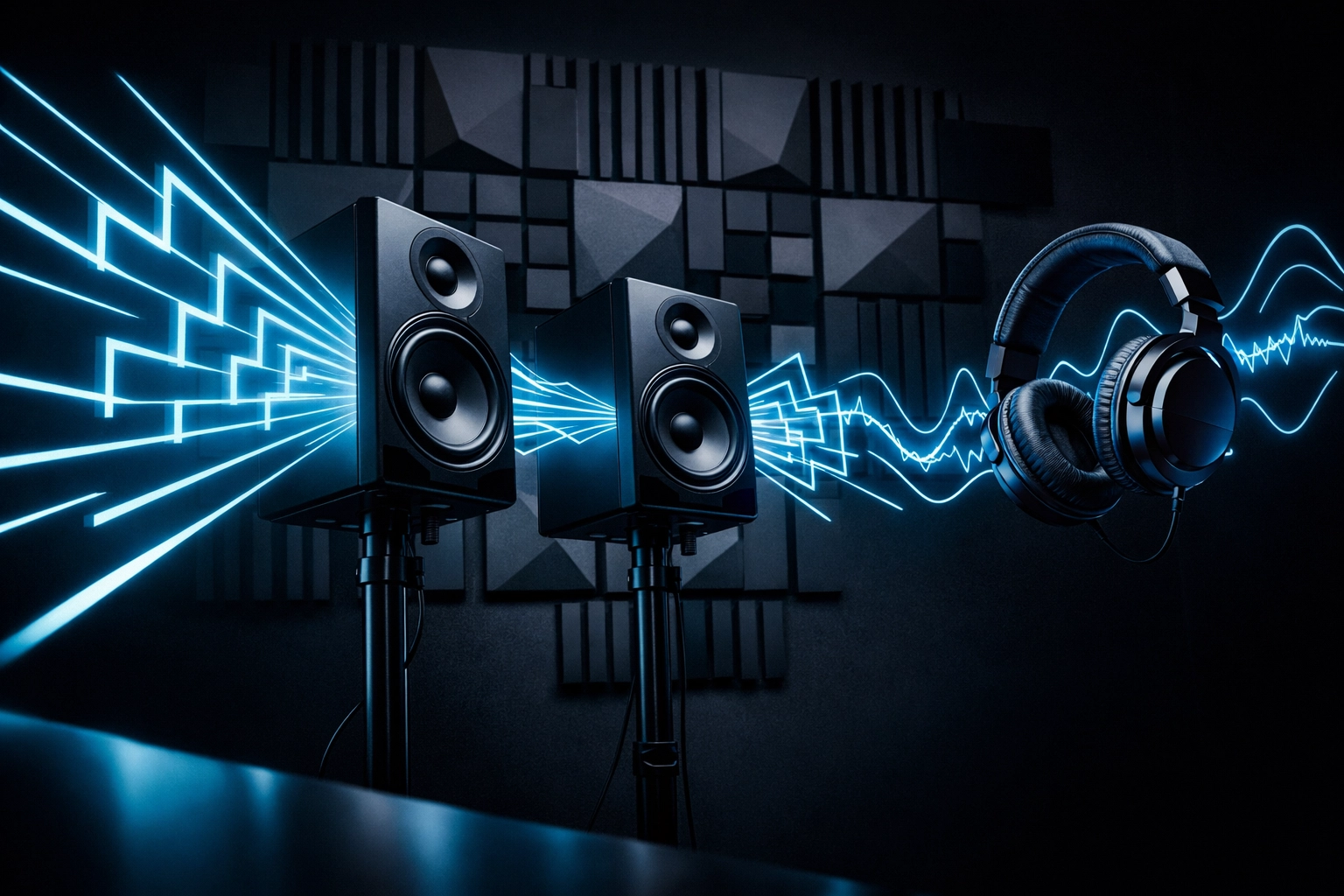
Studio Monitors: Active monitors in the 5-inch to 8-inch woofer range provide sufficient bass response for most home studio spaces without overwhelming smaller rooms. Brands like KRK, Yamaha, JBL, and Adam Audio are offering honest monitoring at accessible price points. The goal isn't speakers that make everything sound exciting, it's speakers that reveal problems clearly so you can address them during production.
Room Treatment Fundamentals: Even the best monitors fail in untreated rooms. Strategic placement of acoustic panels at reflection points, bass traps in corners, and diffusion on rear walls transforms how accurately you perceive your mixes. The investment in basic room treatment, $300-$500 for DIY panels or premade options, delivers more noticeable improvement than upgrading from decent to expensive monitors.
Headphone Reality: Closed-back headphones for tracking prevent bleed into microphones; open-back headphones for mixing provide more natural spatial representation. Having both types covers all production scenarios and provides crucial cross-referencing when making mixing decisions. Beyerdynamic, Audio-Technica, and Sennheiser continue offering professional-grade options at sub-$200 price points.
The Microphone Decision: Versatility Over Specialization
The Large-Diaphragm Condenser: A single quality large-diaphragm condenser microphone handles vocals, acoustic guitars, room ambience, and overhead drum recording with professional results. The Audio-Technica AT2020, Rode NT1, and AKG C214 represent the current sweet spot, microphones delivering clarity and detail without the inflated prices of "vintage" reproductions that most producers can't fully leverage.
The Dynamic Microphone Case: Dynamic microphones like the Shure SM57 and SM58 remain relevant because they're nearly indestructible, require no phantom power, and handle high sound pressure levels. They excel on guitar amplifiers, snare drums, and loud vocal sources where condensers might overload. The SM57 particularly deserves its legendary status, it's equally comfortable on a snare drum, guitar cabinet, or as a broadcast microphone.
What You Don't Need Yet: Ribbon microphones, tube microphones, and specialized instrument microphones are luxuries that matter after you've mastered working with fundamental tools. Expanding your microphone collection makes sense when you're consistently hitting the limitations of what you own, not before.
The DAW and Plugin Ecosystem
Digital Audio Workstation Selection: In 2026, the DAW wars have largely become irrelevant. Ableton Live, FL Studio, Logic Pro, and Reaper all provide professional-grade recording, editing, and mixing capabilities. The decision comes down to workflow preferences and whether you're oriented toward electronic production, traditional recording, or hybrid approaches. Many professionals are now using multiple DAWs for different tasks, Ableton for electronic composition and arrangement, Pro Tools for vocal recording and editing, Logic for orchestral work.
Plugin Strategy: Modern DAWs ship with comprehensive plugin suites that handle fundamental processing needs. The temptation to collect hundreds of plugins creates analysis paralysis. Learning to extract professional results from stock EQ, compression, and reverb tools develops skills that transfer across any platform or plugin. When you do invest in third-party plugins, focus on tools that genuinely expand capabilities, specialized creative effects, particular amp simulators, or orchestral libraries, rather than the fifteenth vintage compressor emulation.
MIDI Controllers and Instruments
Keyboard Controllers: Even if you're not a trained pianist, a MIDI keyboard accelerates composition and arrangement workflows. The 49-key range offers sufficient range for chord progressions and melody work without consuming excessive desk space. Weighted keys feel more expressive but add cost; synth-action keys are perfectly adequate for programming and triggering virtual instruments.
Drum Pads and Controllers: For producers working in hip-hop, electronic, or beat-oriented genres, velocity-sensitive pad controllers like the Akai MPD or Arturia DrumBrute provide tactile performance interfaces that transform how you interact with software instruments and samples.
The AI Production Revolution: OSMIX and LANDR
This is where 2026 home studios gain their most significant advantage over previous generations. AI-powered mixing and mastering services have evolved from experimental novelties to legitimate professional tools that deliver consistently excellent results, and they're transforming the skill ceiling required for commercial-quality releases.
OSMIX for Mixing: OSMIX represents a fundamental shift in how mixing gets approached in home studios. The platform analyzes your multitracks and applies sophisticated processing that considers the relationships between elements rather than treating each track in isolation. For producers still developing their mixing skills, OSMIX provides an educational benchmark, comparing your manual mixes against its AI-generated versions reveals what professional mixing actually sounds like and helps identify where your ears might be deceiving you.
The platform particularly excels at handling common home studio mixing challenges: taming harsh high frequencies from budget microphones, creating cohesive low-end relationships between bass and kick drums, and establishing clear vocal presence without aggressive EQ that draws attention to microphone limitations. While OSMIX shouldn't become a crutch that prevents developing your own mixing skills, it's revolutionizing how quickly producers can achieve release-ready mixes.
LANDR for Mastering: LANDR has matured into a sophisticated mastering service that analyzes genre, dynamic range preferences, and distribution targets to deliver masters that translate across streaming platforms, radio, and physical media. The platform's AI considers how masters will be processed by streaming service algorithms, particularly Spotify and Apple Music's loudness normalization, ensuring your tracks maintain competitive presence without the overly crushed dynamics that plagued the loudness wars era.
The value proposition is compelling: professional mastering traditionally costs $50-$150 per track; LANDR's subscription model provides unlimited mastering for $10-$30 monthly. For producers releasing multiple singles or building catalogs, this economics shift is enabling professional-quality releases without the financial barrier that previously kept bedroom producers from competing with label-backed artists.
The Human Touch Consideration: These AI services work best when you understand what they're doing and can evaluate their results critically. They're tools that accelerate workflows and establish quality floors, not replacements for developing your own ears and technical understanding. The most successful home studio producers in 2026 are using OSMIX and LANDR as collaborators, tools that handle technical heavy lifting while they focus on creative decisions and artistic vision.

The Budget Allocation Framework
For a $2,500 initial investment, here's the strategic allocation that maximizes creative potential:
Audio Interface: $300 (Focusrite Scarlett 4i4 or Universal Audio Volt 276) Studio Monitors: $400 (pair of 5" nearfield monitors) Headphones: $300 ($150 closed-back for tracking, $150 open-back for mixing) Microphones: $400 (large-diaphragm condenser + dynamic microphone) Room Treatment: $400 (basic panel and bass trap kit) MIDI Controller: $200 (49-key keyboard controller) Software/Services: $500 (DAW license if needed, OSMIX and LANDR subscriptions, essential plugins)
This allocation prioritizes accurate capture and monitoring while leveraging modern software and services for downstream processing. As skills develop and specific needs become apparent, strategic upgrades make sense, better preamps, specialized microphones, or expanded I/O for tracking full bands.
What Success Actually Looks Like
The home studio that matters in 2026 isn't defined by equipment lists but by completed creative work. The tools outlined here remove technical barriers that previously prevented bedroom producers from achieving professional results. What remains is the creative work itself: developing your unique artistic voice, understanding arrangement and composition, and creating music that connects with listeners emotionally rather than just technically.
We are witnessing home studios producing Grammy-nominated records, global hits, and soundtrack work that rivals major facility productions. The democratization is complete: the tools are accessible, the knowledge is available through online education, and services like OSMIX and LANDR have eliminated the technical expertise barriers that previously separated amateurs from professionals.
The question facing new producers isn't whether home studios can compete professionally: that debate ended years ago. The question is whether you're willing to invest focused time into learning these tools deeply rather than chasing the next gear purchase that promises to magically elevate your sound. The home studio essentials that actually matter in 2026 are the ones you'll master through consistent use, critical listening, and creative experimentation. Everything else is just noise.