ROLI's AI Music Coach: Is Hand-Tracking the Future of Music Education?
Updated: Apr 6
Picture the traditional piano lesson: you're sitting at the keys, your teacher is hovering over your shoulder, occasionally tapping your wrist and reminding you to curve your fingers. "No, use your third finger there," they'll say, watching every movement. That kind of real-time technique feedback has always been the irreplaceable magic of in-person instruction: until now. ROLI's new AI Music Coach is fundamentally changing what's possible in digital music education by doing something no app has done before: actually watching how you play.
We're witnessing a pivotal shift in music learning technology. While countless apps can tell you if you hit the right notes, ROLI's system is observing your hand position, finger movement, and posture with infrared precision. This isn't just another iteration of existing ed-tech: it's a completely different approach to how machines can understand and teach musical technique.
The Technology Behind the Magic
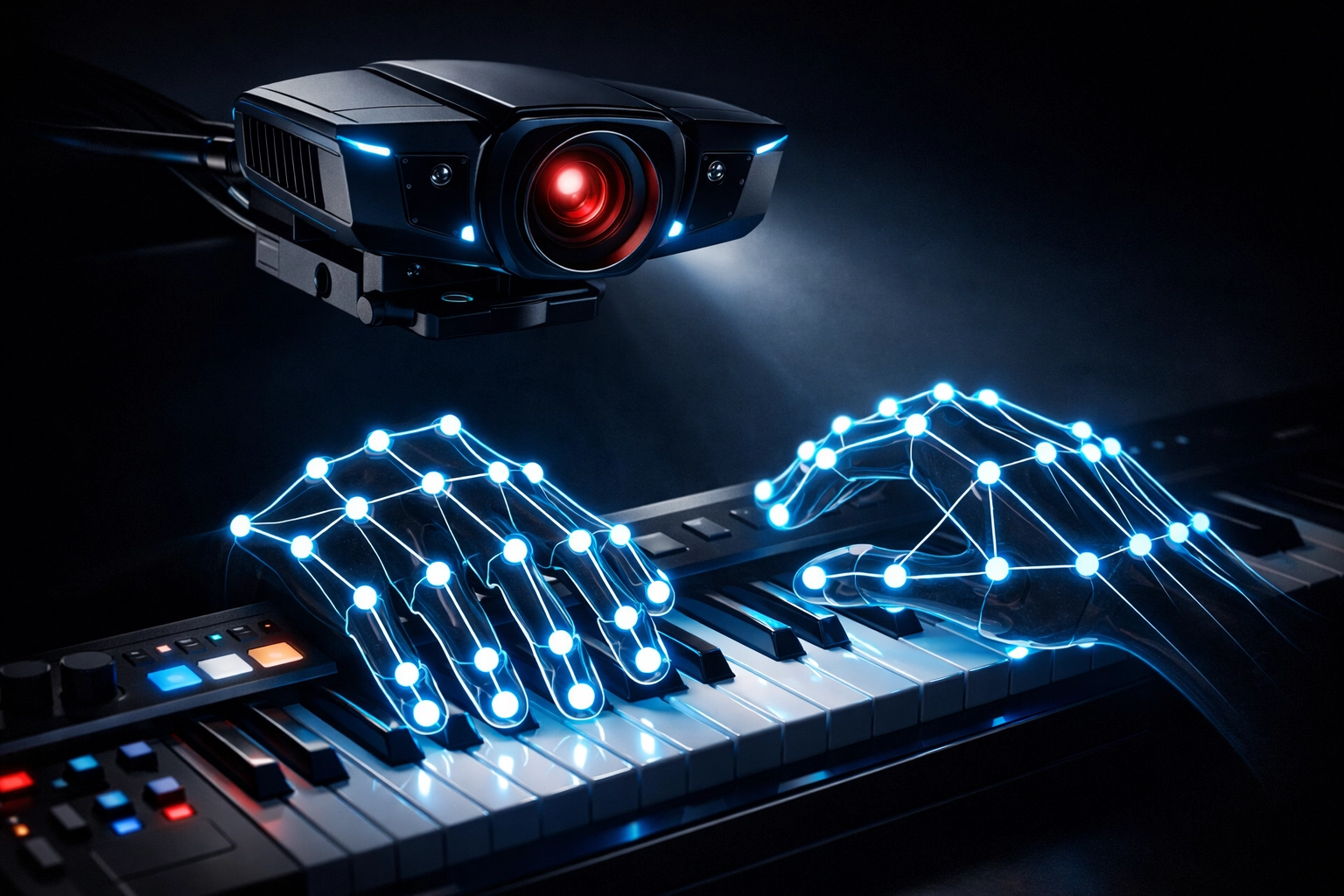
At the heart of this system is ROLI's Airwave, an infrared camera that tracks all 27 joints in each of your hands at 90 frames per second. To put that in perspective, that's capturing more biomechanical data than most motion-capture systems used in film production. The camera sits above your keyboard: whether that's ROLI's own LUMI keys or any MIDI controller: and creates a detailed 3D map of exactly what your hands are doing in real time.
Here's what makes this fundamentally different from traditional music learning software:
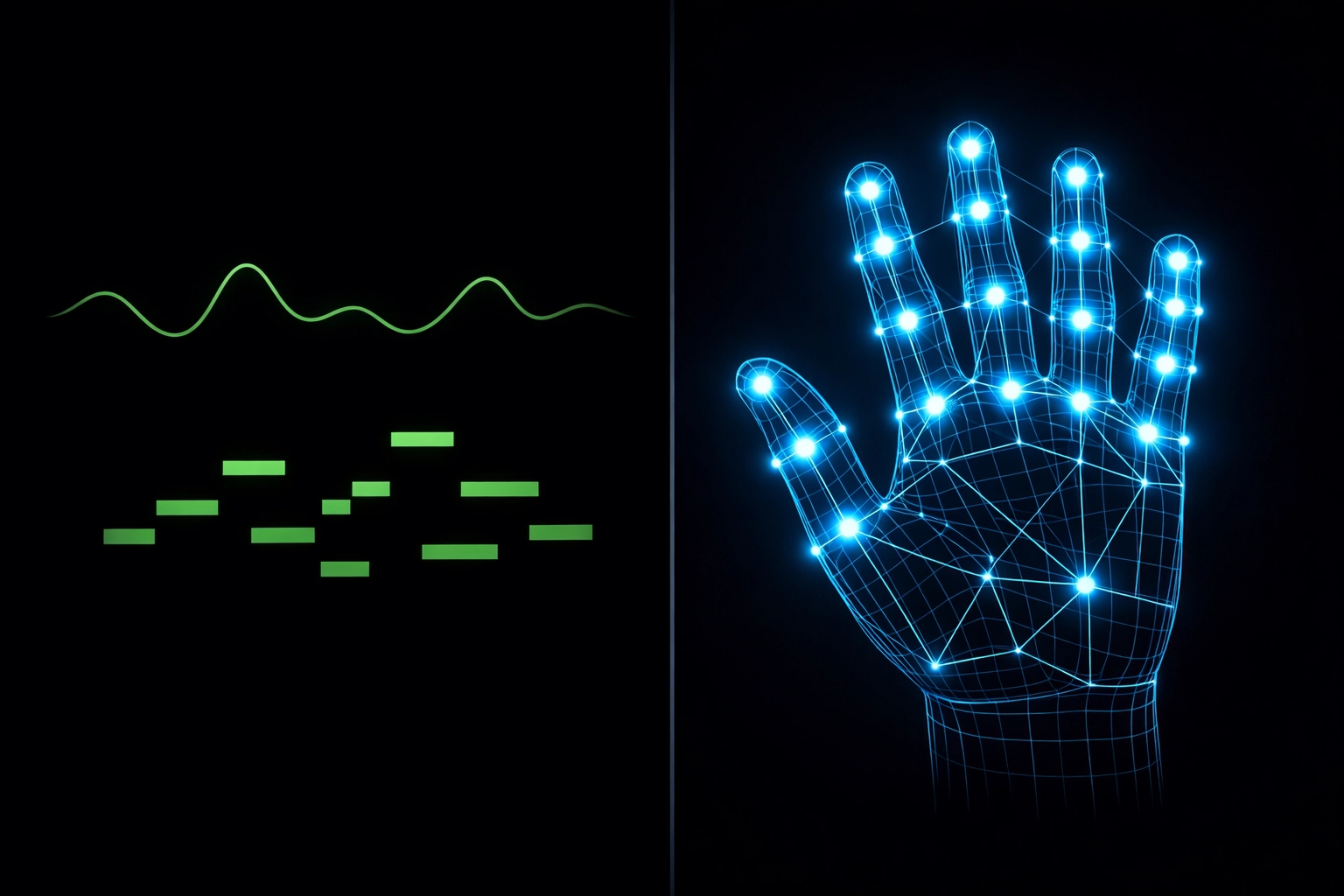
MIDI-Only Systems: Traditional apps listen to the notes you're producing through MIDI data. They know if you played a C instead of a D, but they have no idea how you played it. Did you use the correct finger? Was your wrist position causing tension? They're essentially blind to technique.
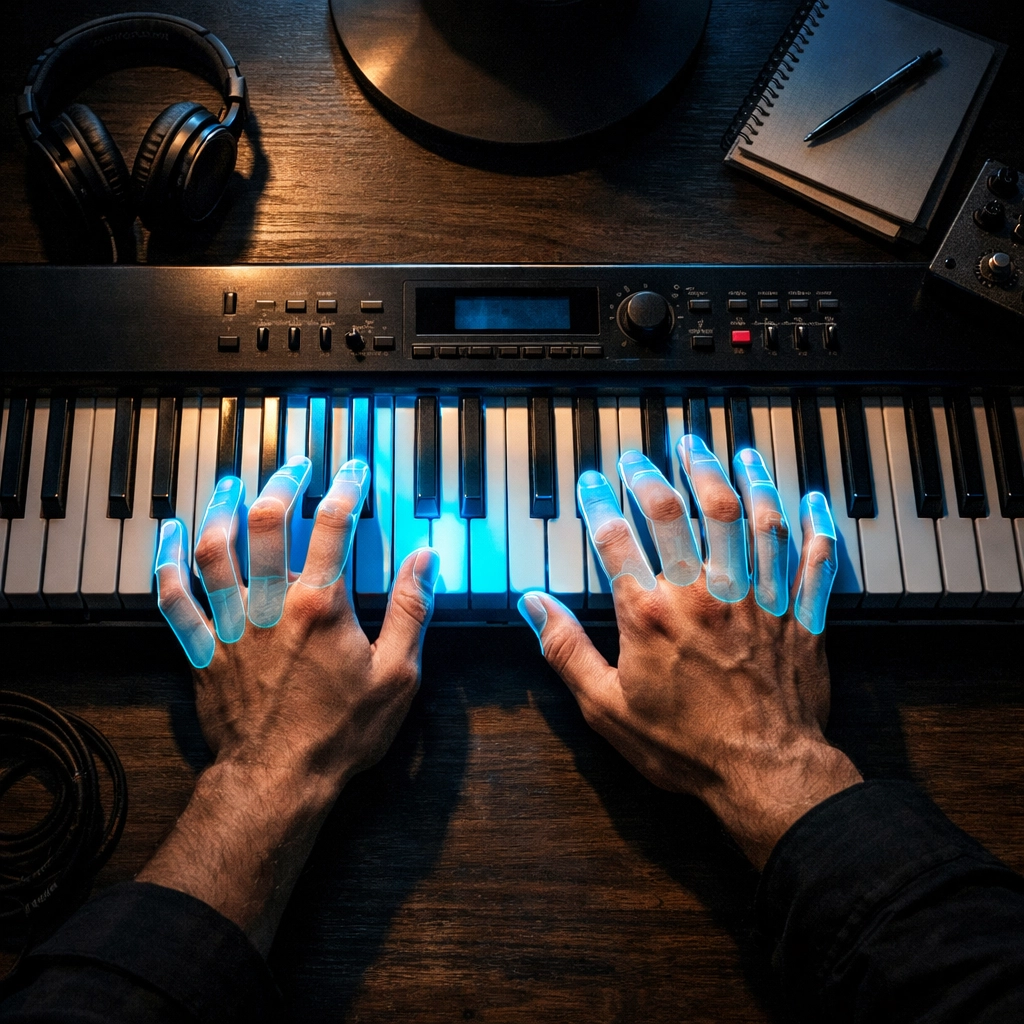
Vision-Based Tracking: Airwave doesn't just hear what you're playing: it sees the mechanics behind it. The system can identify if you're using your pinky when you should be using your ring finger, if your hand position is creating unnecessary strain, or if your finger motion is inefficient. These are insights that audio-only feedback simply cannot provide.
Conversational AI Integration: The hand-tracking data feeds into a conversational AI coach that can explain what it's observing in natural language. Rather than cryptic error messages or red/green indicators, you get actual coaching feedback: "Try relaxing your thumb: it's creating tension in your hand" or "Great job maintaining that curved finger position through that passage."
The combination of visual tracking and AI-powered feedback creates what ROLI CEO Roland Lamb calls "an entirely new type of practice." The system isn't just reacting to mistakes: it's understanding the physical habits that lead to those mistakes in the first place.
Why Technique Tracking Changes Everything
Anyone who's learned an instrument knows that hitting the right notes is just the beginning. The real challenge: and the thing that separates beginners from advanced players: is how you produce those notes. Hand position, finger independence, economy of motion, relaxed tension: these are the foundational skills that traditional digital learning tools have never been able to address effectively.
The AI Music Coach is tackling this head-on by creating adaptive lessons that respond to both what you're playing and how you're playing it. If the system detects that you're consistently using incorrect fingering, it doesn't just move you to the next exercise: it generates targeted practice specifically addressing that weakness. The pacing and difficulty adjust in real time based on what the AI observes, creating a genuinely personalized learning path rather than a one-size-fits-all curriculum.
This is particularly powerful for self-taught musicians who might be developing bad habits without realizing it. Playing with tension, using inefficient fingering patterns, or maintaining poor posture can all lead to plateaus or even injury over time. Having an AI system that can catch these issues early: and more importantly, explain why they matter: is potentially game-changing for accessibility in music education.
The Human Teacher vs. AI Coach Debate
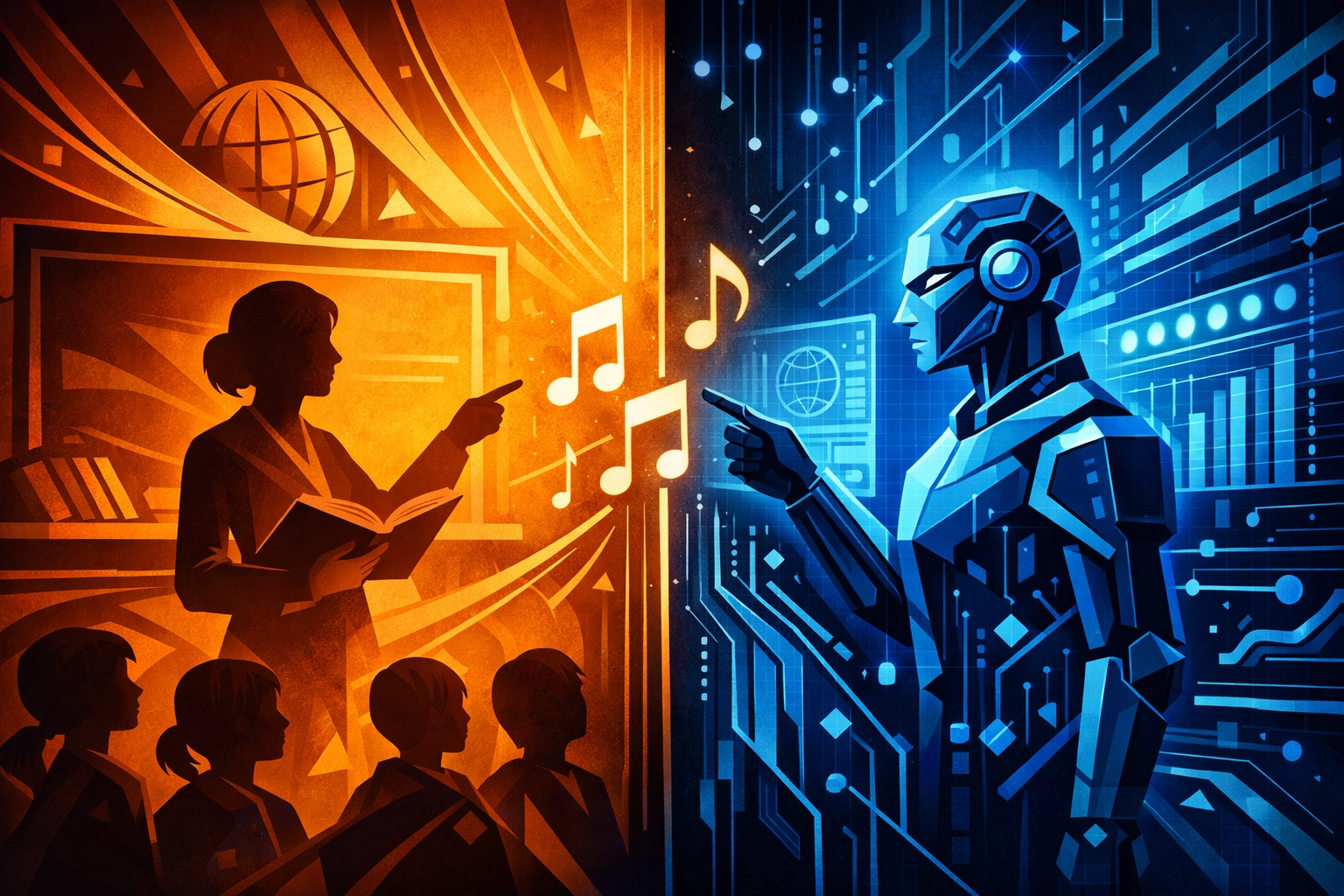
So here's the question everyone's asking: Can an AI coach actually replace a human piano teacher? ROLI's answer is interesting: they're deliberately not positioning this as a replacement. Instead, they're framing the AI Coach as a "scalable companion" that addresses a very real gap in music education accessibility.
Let's be honest about the traditional model: private music lessons are expensive, require consistent scheduling, and aren't available to everyone. If you live in a rural area, if you work irregular hours, if you're learning later in life and feel self-conscious about beginner mistakes: there are countless barriers to accessing quality instruction. The AI Coach isn't trying to replicate the full depth of a master teacher relationship; it's trying to provide some level of intelligent feedback to people who otherwise wouldn't have any.
What AI Does Better:
Always available: No scheduling conflicts, no commute, practice at 2 AM if that's when you have time
Infinite patience: Won't judge you for repeating the same measure 47 times
Precise observation: Can track micro-movements that even experienced teachers might miss
Multilingual accessibility: Supports over 40 languages, making it genuinely global
No sheet music required: Lowers the barrier for people intimidated by traditional notation
What Humans Still Offer:
Emotional intelligence: Reading frustration, celebrating breakthroughs, adjusting teaching style to personality
Musical interpretation: Teaching why you might phrase something a certain way, not just how to execute it
Cultural context: Sharing the history and feeling behind the music
Motivation and accountability: The human relationship that keeps students coming back
Improvisation and creativity coaching: Teaching students to break the rules effectively
The reality is probably less "either/or" and more "both/and." The best outcome might be students using AI coaching for daily practice and technique work, then supplementing with periodic human instruction for interpretation, musicality, and the intangible aspects of artistry that machines can't yet address.
The Hardware Ecosystem: Airwave Meets LUMI
ROLI isn't just releasing software: they're building an integrated hardware ecosystem designed to work together. The Airwave camera is designed to pair seamlessly with their LUMI keyboard system, which uses light-up keys to guide finger placement and note positions. Together, they create a visual and analytical feedback loop that's remarkably comprehensive.
The LUMI keys show you where to play, while Airwave watches how you're playing and provides real-time corrections. It's a teaching approach that engages multiple learning styles simultaneously: visual learners get the LED guidance, kinesthetic learners get the physical feedback from proper technique, and analytical learners get detailed performance metrics.
What's particularly smart is that Airwave isn't locked to ROLI's hardware. It works with any MIDI keyboard, meaning you can integrate it into an existing setup rather than committing to an entirely new instrument. This interoperability is crucial for adoption: asking people to replace their instruments is a much bigger ask than adding a camera module to their current practice space.
Who This Is Actually For
The accessibility angle here is genuinely compelling. Music education has historically been gated by geography, economics, and time constraints. The AI Music Coach is attempting to democratize access to intelligent feedback in ways that weren't possible before.
Consider these use cases:
Adult Learners: People returning to music after decades away, or starting for the first time, often feel self-conscious about making beginner mistakes in front of a teacher. Private AI coaching removes that psychological barrier.
Rural and Remote Learners: If you live hours from the nearest qualified piano teacher, this technology suddenly makes structured learning viable.
Budget-Conscious Students: At-home practice with AI feedback could replace some (though not all) paid lesson time, making music education more financially sustainable.
Non-Native English Speakers: With support for 40+ languages, the system is genuinely global in a way that in-person instruction often isn't.
Schedule-Constrained Professionals: Shift workers, parents with unpredictable schedules, or anyone who can't commit to weekly lesson slots can practice whenever time allows.
This isn't replacing the conservatory model for serious musicians. But it's potentially creating an on-ramp for millions of people who wouldn't otherwise have access to quality musical instruction.
Looking Ahead: Where Hand-Tracking Takes Us
The broader implication here extends beyond just ROLI's product. If hand-tracking becomes the standard for music education software: and that's still an "if," dependent on adoption rates and competitor response: we're looking at a fundamental shift in what digital learning tools can offer.
Other instrument manufacturers are watching this closely. Could we see similar systems for guitar (tracking fretting hand position and pick technique), drums (analyzing stick grip and motion economy), or wind instruments (monitoring embouchure and breath support)? The technology is certainly adaptable.
What's most exciting is that this isn't just about replicating existing teaching methods in digital form: it's about creating teaching approaches that were never possible before. No human teacher can literally see your micro-movements at 90 frames per second and provide instant corrective feedback. That's not replacing human instruction; it's complementing it with capabilities that humans simply don't have.
Whether hand-tracking becomes the industry standard or remains a premium feature depends on factors beyond ROLI's control: hardware costs need to come down, the AI needs to prove itself over time, and competitors need to validate the approach by building similar systems. But we're clearly at an inflection point where music education technology is moving from passive feedback to active observation.
For now, ROLI is leading this particular charge, combining vision technology with conversational AI in ways that are genuinely innovative. Whether you're a skeptic who believes nothing replaces human instruction or an early adopter excited about AI-assisted learning, it's worth paying attention to where this technology is heading. The future of music education is becoming increasingly hybrid: and increasingly intelligent.